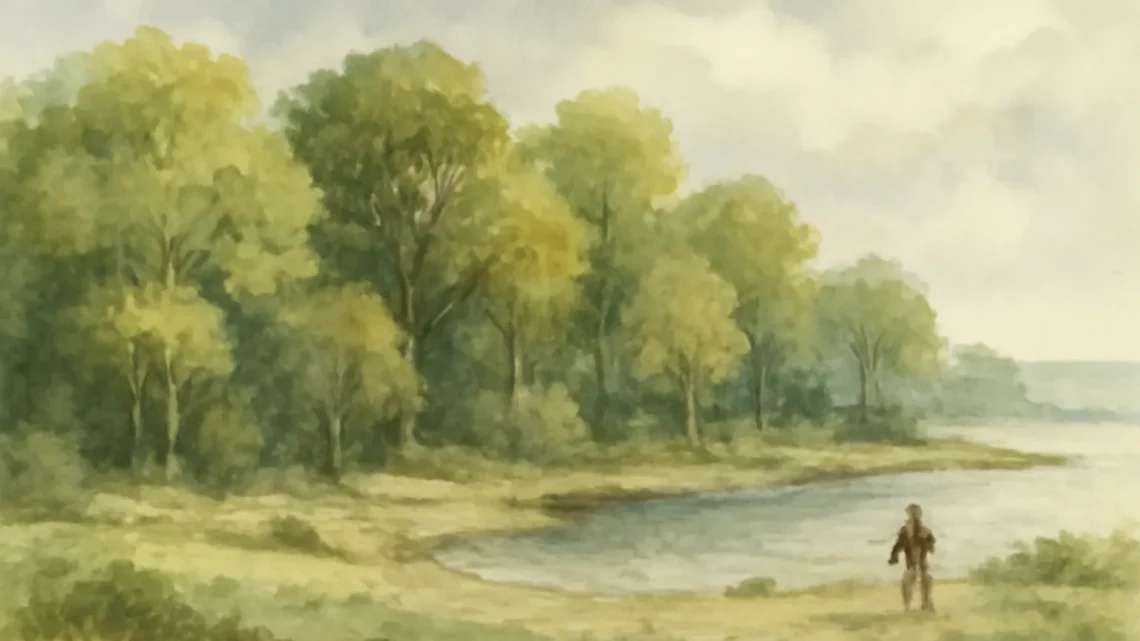
Ancient Forests Found in North Sea’s Lost Land Bridge
March 12, 2026New DNA research reveals Doggerland’s environment thousands of years earlier than thought
Recent scientific research has uncovered evidence that the area now submerged beneath the North Sea, once known as Doggerland, supported temperate forests and potentially human habitation much earlier than previously believed. This land bridge once connected Britain to mainland Europe before rising sea levels led to its flooding.
Findings from sedimentary ancient DNA analysis
A study led by researchers at the University of Warwick analysed sedimentary ancient DNA (sedaDNA) from marine cores taken across Southern Doggerland. The samples, dating back more than 16,000 years, revealed the presence of temperate tree species such as oak, elm, and hazel. The research also identified DNA from lime trees (Tilia), which appeared around 2,000 years earlier than previously recorded in Britain, suggesting that Doggerland may have served as a northern refuge for warmth-loving species during the last Ice Age.
In addition, DNA from a tree genus called Pterocarya, related to walnuts and thought to have disappeared from north-western Europe around 400,000 years ago, was detected. This indicates that some species survived in the region far longer than expected.
Implications for understanding prehistoric environments and human settlement
The presence of woodland habitats in Doggerland 16,000 years ago challenges earlier assumptions about the timing of forest establishment in northern Europe. It also supports the idea of “microrefugia” — small areas where temperate plants survived Ice Age conditions — which may explain the rapid recolonisation of trees after the Ice Age.
Parts of Doggerland remained above water until approximately 7,000 years ago, surviving events such as the Storegga tsunami around 8,150 years ago. This prolonged existence could have provided a habitat suitable for early Mesolithic human communities before the land was finally submerged.
Expert commentary
- Professor Robin Allaby from the University of Warwick, lead author of the study, noted that the findings provide the best evidence yet that Doggerland’s wooded environment could have supported early human populations prior to flooding.
- Professor Vincent Gaffney of the University of Bradford highlighted that Doggerland was not just a land bridge but also a significant area for early human settlement and ecological refuge, influencing prehistoric settlement patterns across northern Europe.
Research background and publication
The research was published in the journal Proceedings of the National Academy of Sciences (PNAS) and was funded by the European Research Council through the Horizon 2020 programme. The project, known as LOST FRONTIERS, combined archaeo-geophysics, molecular biology, and computer simulation to study the submerged landscapes of the southern North Sea and their role in past ecological and human transitions.
For further details, the published paper is titled “Early colonization before inundation consistent with northern glacial refugia in Southern Doggerland revealed by sedimentary ancient DNA”.