£1m Project to Improve Home Care Medication Safety
May 18, 2026New research aims to reduce medicine errors for home care patients
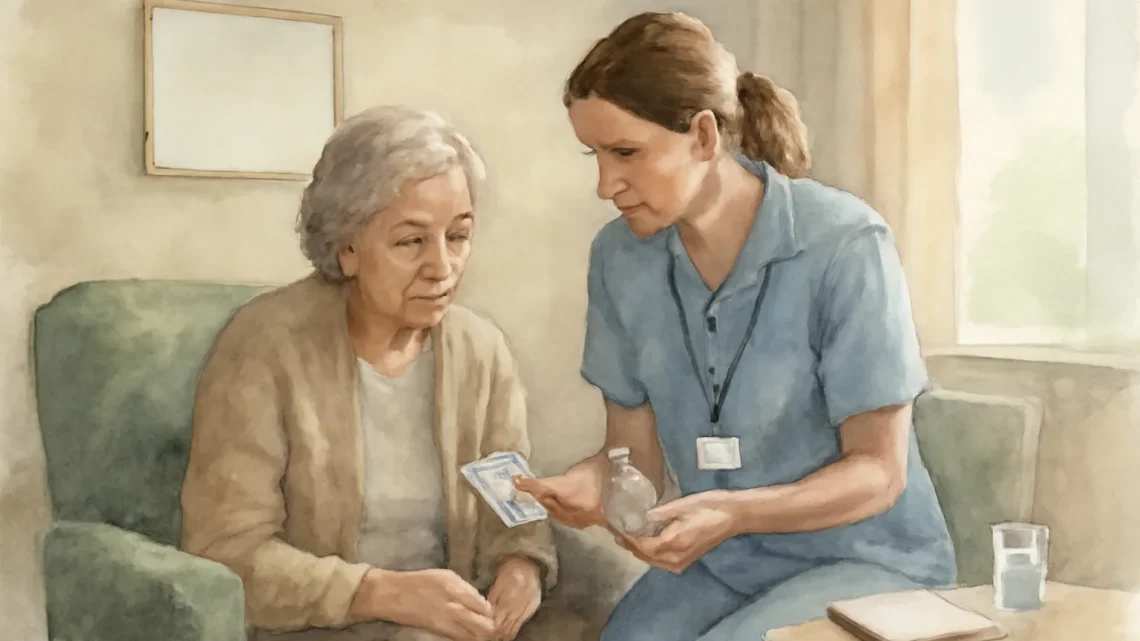
A new research project worth £1 million has been launched to improve the safety of medication management for people receiving care at home. Led by the University of Bradford and funded by the National Institute for Health and Care Research (NIHR), the study seeks to develop and test a medicines management safety system to support older adults and others reliant on home care workers.
Background and significance
Medication errors are a significant concern for the NHS, with hospital admissions caused by such errors estimated to cost around £84 million annually. The project aims to address this issue by focusing on the safety of medicines use in home care settings, where many patients take multiple prescribed treatments under the supervision of care workers.
Support from disability activist
Kate Smyth, co-founder of the Disabled NHS Directors Network and a full-time wheelchair user with multiple sclerosis, has expressed her support for the project. She highlighted the challenges faced by people who rely on carers for medication management, stating that the more assistance provided to care workers, the better the outcomes for patients.
“I can’t get meds out of the packets. If you need care in the home, you feel vulnerable, that’s why I was keen to get involved in this research.”
Project structure and timeline
The research will run from June 2026 to November 2028 and is structured in several phases:
- Phase 1: Interviews and observations with home care workers, managers, care users, family carers, local authority commissioners, and NHS professionals to identify factors compromising medication safety at home.
- Phase 2: Workshops involving care users, families, and health and social care staff to co-design practical tools, training materials, and potential digital solutions. Early versions of these resources will be tested by care managers.
- Phase 3: Testing of the developed tools with frontline staff and patients, collecting feedback through surveys and interviews. The system will be refined and evaluated for cost-effectiveness and usability.
If successful, the project team plans to recommend broader trials and develop training packages for regional and national implementation.
Comments from project leads and partners
Professor Beth Fylan, research lead and Professor in Healthcare Systems and Safety at the University of Bradford, emphasised the importance of the care workforce in supporting independent living:
“This research will support them, older people who take multiple medicines, and their families to make taking medicines at home as safe as possible.”
Rachael Ross, Workforce Lead at Bradford Care Association, noted the association’s involvement and hopes for the study:
“The Association is pleased to be involved with this important quality and safety improvement study, which we hope will benefit people using care services and the staff who support them.”
Identified needs and challenges
Early engagement with patients, families, and care workers has highlighted several issues:
- Care users often feel confused by the number and variety of medicines and worry about whether care workers have accurate information.
- Care workers experience anxiety about making errors and face difficulties accessing timely support.
- Improving confidence and training for care workers has been identified as a key priority.
Funding and collaboration
The project is funded by the NIHR Yorkshire and Humber Patient Safety Research Collaboration and hosted by the University of Bradford’s Institute of Health and Social Care. It involves collaboration with several partners, including:
- Universities of Leeds and Exeter
- Bradford Teaching Hospitals NHS Foundation Trust
- NHS West Yorkshire Integrated Care Board
- NHS South Yorkshire Integrated Care Board
- North Cumbria Integrated Care NHS Foundation Trust
- Equal Care Co-Op
NIHR perspective
Professor Kathy Rowan, Director of the NIHR Health and Social Care Delivery Research Programme, highlighted the importance of research supporting care delivery at home:
“Investing in research studies which support the government’s mission to offer more care on people’s doorsteps and in their own homes is more important than ever.”
“It is vital that patients can continue to receive treatment in the comfort of familiar surroundings. It reassures loved ones and, at the same time, eases pressure on crucial NHS resources.”