Iran’s Call for Help Raises Concerns Over Future Control
March 3, 2026Exploring the complexities behind Iran’s recent protests and international involvement
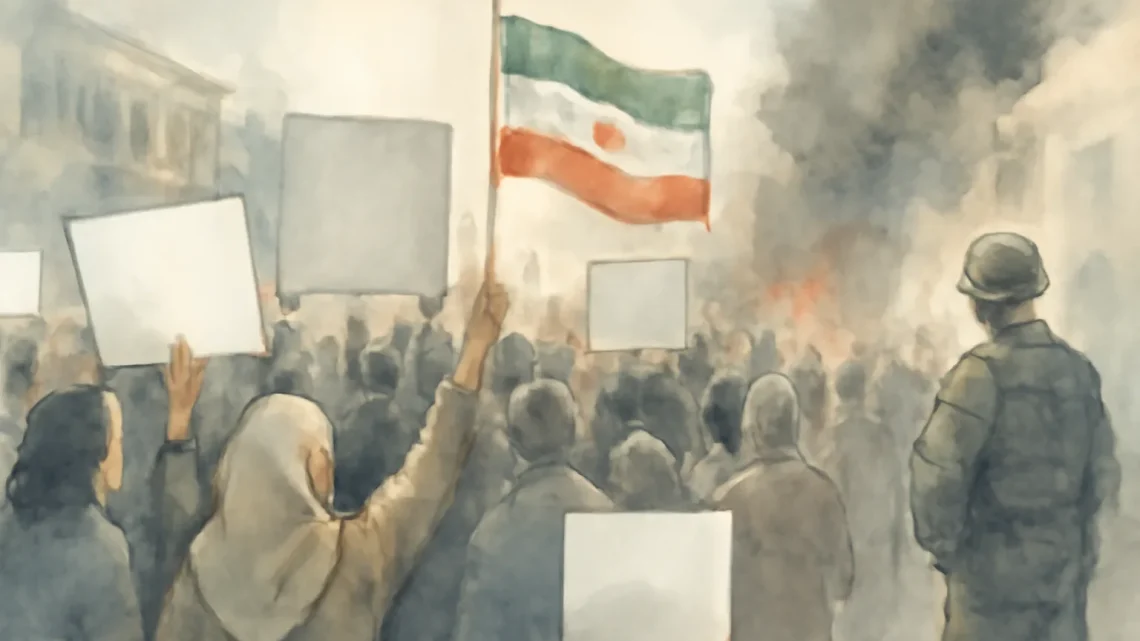
Recent months have seen thousands of Iranians protesting globally with calls for freedom and the return of the exiled Prince Pahlavi. However, alongside these demonstrations lies a significant question about the potential consequences of seeking external assistance to address Iran’s political crisis.
Background to the Protests
In December 2025, Iran experienced protests reportedly the deadliest since the 1979 Islamic Revolution. The demonstrations followed the death of Mahsa Amini and have been met with severe violence from security forces. Eyewitness accounts describe visible signs of blood on streets and walls, and families searching for missing loved ones. Despite the passage of time, the marks of violence remain evident.
Historical Context of Foreign Influence
Iran’s history reveals a pattern where internal struggles for change have been intertwined with foreign powers:
- The 1905 Constitutional Revolution aimed to limit monarchical power but unfolded under Russian and British influence.
- The 1979 overthrow of Shah Mohammad Reza Pahlavi led to the establishment of the Islamic Republic.
- The Iran-Iraq War (1980-1988), initiated by Iraq with Western support, ultimately strengthened Iran’s political consolidation.
More recently, movements such as the Green Movement in 2009 and the “Woman, Life, Freedom” uprising in 2022 sought reform but were suppressed. External actors have often been involved in these events, sometimes offering support but also pursuing their own interests.
Concerns Over External Intervention
There is a division within the Iranian community regarding the role of foreign intervention. Some hope for international support, while others fear that seeking help from abroad may lead to new forms of domination, repeating historical patterns where outside powers have influenced Iran’s political trajectory.
Philosophical perspectives, such as those of Friedrich Nietzsche, warn against replacing one form of authority with another. True transformation, according to this view, requires internal moral, cultural, and institutional change rather than reliance on external forces.
Implications for Iran’s Future
- External pressure can weaken or harden regimes but cannot instil democratic habits or shared responsibility.
- Change imposed from outside may carry foreign priorities that do not align with the aspirations of the Iranian people.
- Lasting freedom depends on internal efforts to resist authority and exercise power differently.
While the courage of protesters is widely recognised, the ongoing violence highlights the risks involved. The question remains whether Iran can achieve sustainable change without falling under another form of control.
Understanding these complexities is essential as the international community considers its response to Iran’s current situation.