University Archives Reveal Six Decades of Change
April 8, 2026Tracing Campus Life and Developments from the 1960s to 2010s
The University of Bradford has opened its archive of staff and student newsletters to provide a detailed record of campus life, culture, and community developments spanning sixty years. These newsletters, dating from the 1960s through to the 2010s, document significant milestones, everyday moments, and evolving priorities within the institution.
1960s: Foundation and Growth
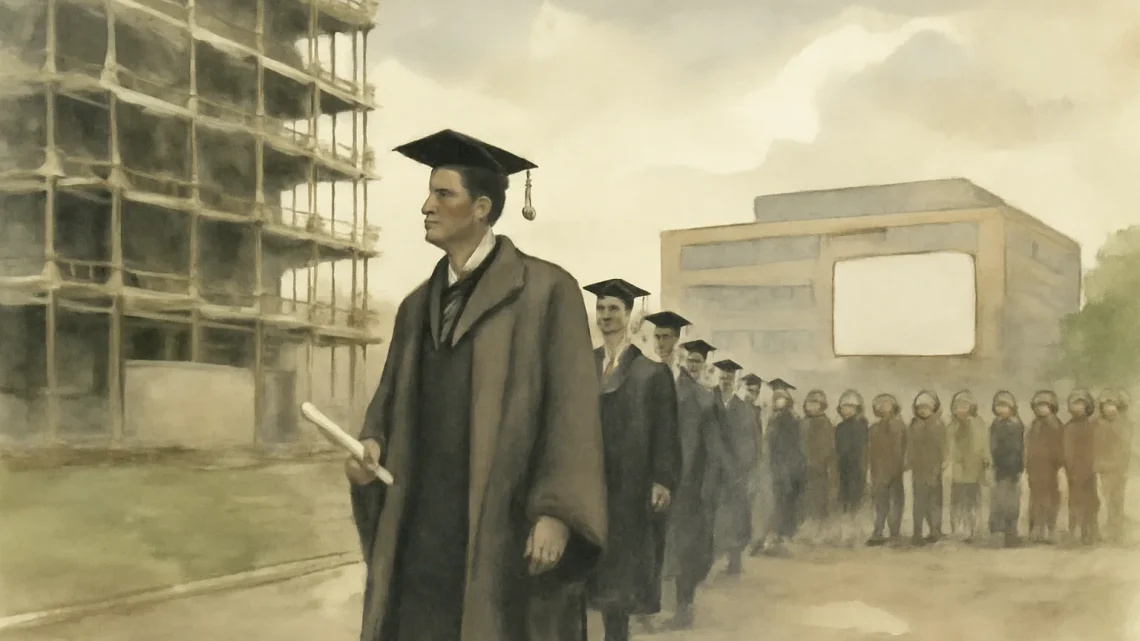
The earliest newsletters highlight a young university marked by formal ceremonies and expansion. In 1966, the installation of the first Chancellor was celebrated with a city-centre academic procession involving students, staff, and civic dignitaries. Plans for new facilities, such as the Chemical Engineering and Nuclear Science Building in 1967, reflected the university’s growth ambitions.
- Scholarships and grants were offered with specific eligibility criteria, including gender-based awards.
- Student accommodation was characterised by orderly and formal living conditions.
- Technological improvements included the installation of 100 new telephones in 1968.
- Student societies ranged from the Choral Society to the Motor Club and Philatelic Society.
1970s: Social Change and Student Welfare
The 1970s newsletters reveal a university adapting to rapid social changes and expanding student services. Notable events included the first Bradford Arts Festival in 1970, which aimed to engage both campus and local communities.
- Graduate employment trends were analysed, showing links between job opportunities and industry needs.
- Student health services reported increasing consultations and psychological support requirements.
- Careers advice emphasised flexible and informed choices for graduates entering various sectors.
1980s: Modernisation and Research Advances
During the 1980s, the university focused on strategic planning, community engagement, and technological innovation. Highlights included:
- Recognition of staff achievements, such as an OBE award.
- Introduction of computer-based systems to support medical procedures and emergency training.
- Archaeological research involving Bronze Age reconstructions.
- Funding secured for the Burns Unit and related research fellowships.
1990s: Academic Innovation and Campus Culture
The 1990s newsletters present a university embracing new research directions and celebrating diverse campus activities. Features included:
- Profiles of researchers using digital tools for historical reconstruction.
- Recognition of academic appointments, including the first Professor of Health Studies.
- Coverage of student life, fashion, and cultural events alongside scientific achievements.
2000s: Milestones and International Collaboration
The university marked its 40th anniversary with commemorative events and publications. The decade saw a focus on research, international partnerships, and community engagement:
- Exhibitions combining scientific imaging with historical artefacts.
- Installation of a new Chancellor and related formal ceremonies.
- Participation in pan-European health studies and improvements in business education rankings.
- Development of new equipment for medical research facilities.
2010s: Research Leadership and Medical Advances
The 2010s newsletters highlight continued growth in research and global engagement, including:
- A 50th anniversary edition reflecting on the university’s heritage.
- Recognition of academic staff receiving honours for contributions to healthcare.
- Development of a new diagnostic test for prosopagnosia (face blindness).
- Research on an experimental drug showing promise against mesothelioma, an asbestos-related cancer.
These archival newsletters offer a comprehensive view of how the University of Bradford has evolved over six decades, reflecting changes in academic focus, student life, technological progress, and community involvement.