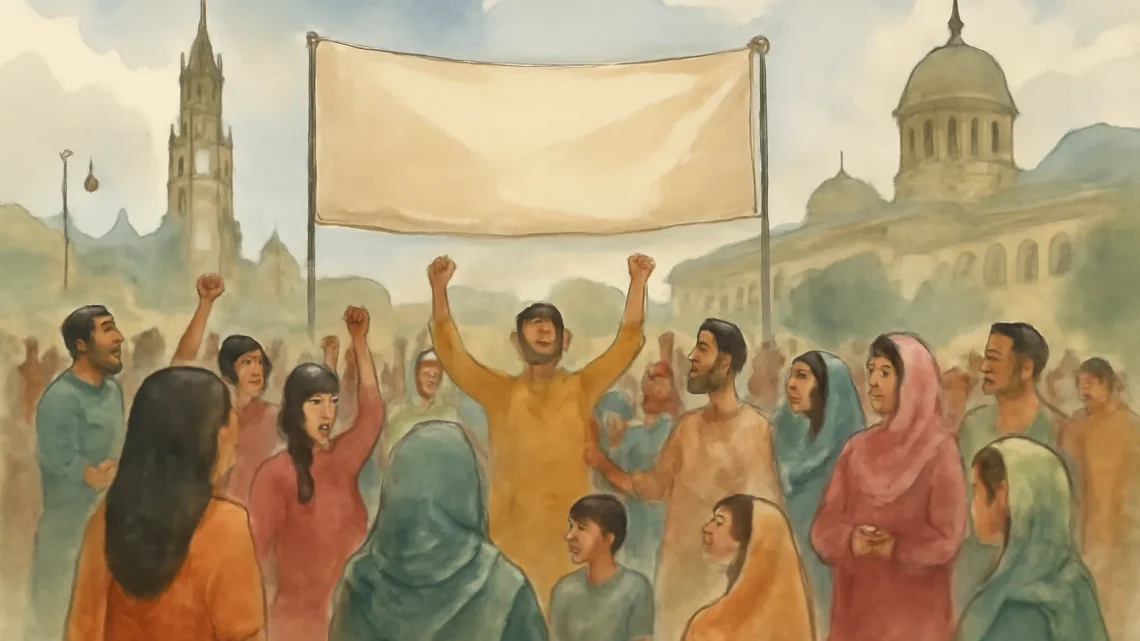
South Asian Heritage Month 2026 Highlights Diversity in Bradford
July 1, 2026Celebrating a Month of Unity and Cultural Heritage
South Asian Heritage Month 2026 takes place from 1 to 31 July, with the theme “Unity in Diversity.” The event recognises the rich cultural contributions and histories of South Asian communities in Bradford and across the UK. Bradford is home to one of the country’s largest South Asian populations, with nearly one third of its residents identifying as Asian or Asian British. The Pakistani community represents the largest group, alongside significant Indian and Bangladeshi populations.
Historical Background of Bradford’s South Asian Communities
Migration from regions such as Mirpur, Sylhet, Gujarat, and the Punjab began in the 1950s, primarily to work in the textile and manufacturing industries. Many migrants settled permanently in the district, establishing strong family networks that have shaped Bradford’s identity over generations.
Purpose and Significance of South Asian Heritage Month
Launched in 2020, South Asian Heritage Month aims to acknowledge and celebrate the interconnected histories of the UK and South Asia. It seeks to unite South Asian communities through reflection and pride, while recognising their influence on various aspects of life in Bradford, including food, fashion, music, language, business, and community activities.
Theme for 2026: Unity in Diversity
The theme highlights the diversity within South Asian communities, encompassing multiple languages, faiths, cultures, and histories. It encourages a focus on shared values and a collective sense of belonging and pride among Bradford residents.
Mental Health and Wellbeing in South Asian Communities
Mental health remains a significant concern within Bradford’s South Asian population. Barriers such as stigma, language difficulties, gender expectations, and low trust in formal services often prevent individuals from seeking help. Many people first turn to family members, faith leaders, or community figures for support.
Additional challenges include poverty, poor housing, and discrimination, which contribute to mental health inequalities. Services tailored to the cultural needs of South Asian communities aim to address these issues.
Local Support Services
- Hope and Light Partnership: Provides culturally responsive mental health services for South Asian individuals.
- Roshni Ghar: Offers services such as Umeed and Gup Shup for South Asian women, including one-to-one support and an In-Reach Service for women detained under the Mental Health Act.
- Girlington Centre: Runs the Latte and Let Go service for people over 50.
- Inspired Neighbourhoods: Provides Naye Subah for South Asian women and Small Steps for South Asian men.
Facts About South Asia
- The Indus Valley Civilization, dating back to around 2500 BCE, was located in present-day Pakistan and northwest India, featuring advanced urban planning with cities like Harappa and Mohenjo-Daro.
- Buddhism, Sikhism, and Hinduism are three major religions that originated in South Asia.
- The Mughal Empire was founded in 1526 by Babur, a descendant of Timur and Genghis Khan, known for architectural achievements such as the Taj Mahal.
- The Portuguese established the first European colonial foothold in South Asia by capturing Goa in 1510.
- India gained independence from British rule on 15 August 1947, with Jawaharlal Nehru becoming its first Prime Minister.
- Sri Lanka gained independence in 1948, initially known as Ceylon before changing its name in 1972.
- Bhutan is noted for prioritising Gross National Happiness over Gross Domestic Product in its governance.
- The mathematical concept of zero as a number was developed in ancient India.
- South Asia comprises Afghanistan, Bangladesh, Bhutan, India, The Maldives, Nepal, Pakistan, and Sri Lanka.