Play Supports Recovery for Young Patients at Bradford Hospitals
July 3, 2026How play contributed to a child’s recovery from a rare condition
When two-year-old Bonnie was diagnosed with Guillain-Barré syndrome in February 2026, her condition severely affected her mobility and caused significant pain. The neurological disorder left her unable to move independently, sit up, or walk, which was a distressing change for her and her family.
Role of play in hospital recovery
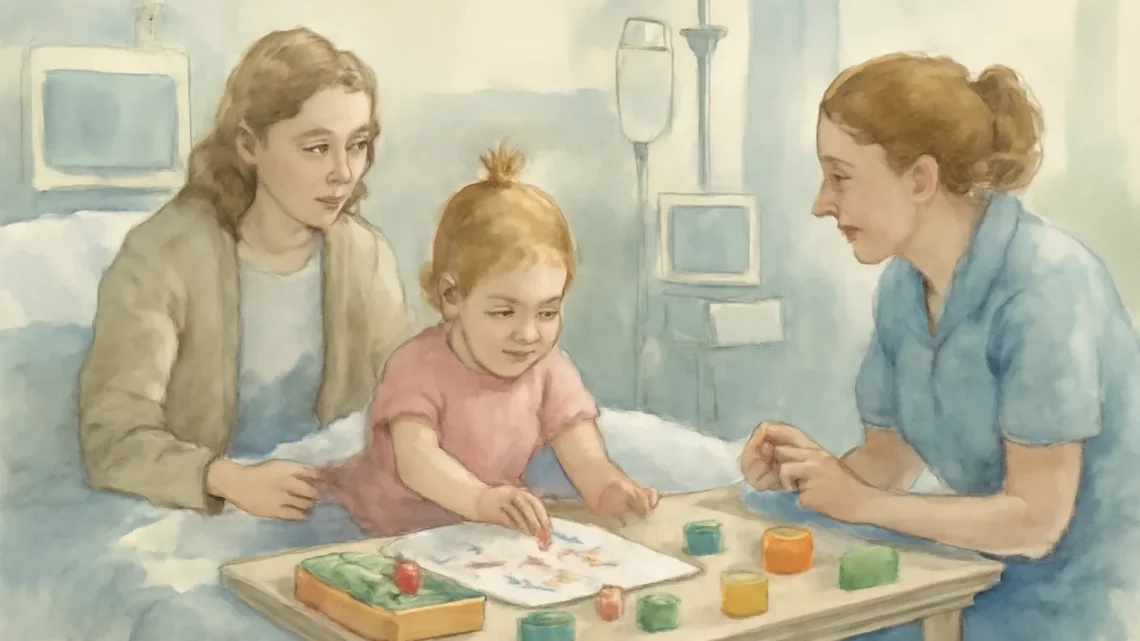
While Bonnie underwent medical treatment at Bradford Teaching Hospitals, play activities became an important part of her recovery process. Play specialists provided crafts, games, and sensory activities designed to engage Bonnie and support her emotional wellbeing. These activities offered comfort and distraction during a difficult period, helping her regain confidence and maintain a sense of normal childhood experience despite her illness.
Benefits of therapeutic play for children in hospital
Research indicates that therapeutic play can:
- Reduce anxiety and distress during medical procedures
- Improve emotional wellbeing
- Support children through treatment and recovery
For children like Bonnie, play can help restore some normality when illness disrupts daily life. It also provides reassurance and comfort to parents and carers facing challenging circumstances.
Provision of play resources at Bradford Teaching Hospitals
Bradford Hospitals Charity supports the availability of toys, creative materials, and play activities for children receiving care at the Trust’s hospitals. Thousands of children and young people access these services annually, which aim to make the hospital environment less intimidating and more child-friendly.
Continuing support for children’s play in hospital
Initiatives such as The Gift of Play Appeal work to ensure that children undergoing treatment can continue to experience the benefits of play during their hospital stay. These efforts highlight the importance of addressing not only the physical but also the emotional and psychological needs of young patients.